
RIO GRANDE CORRIDOR
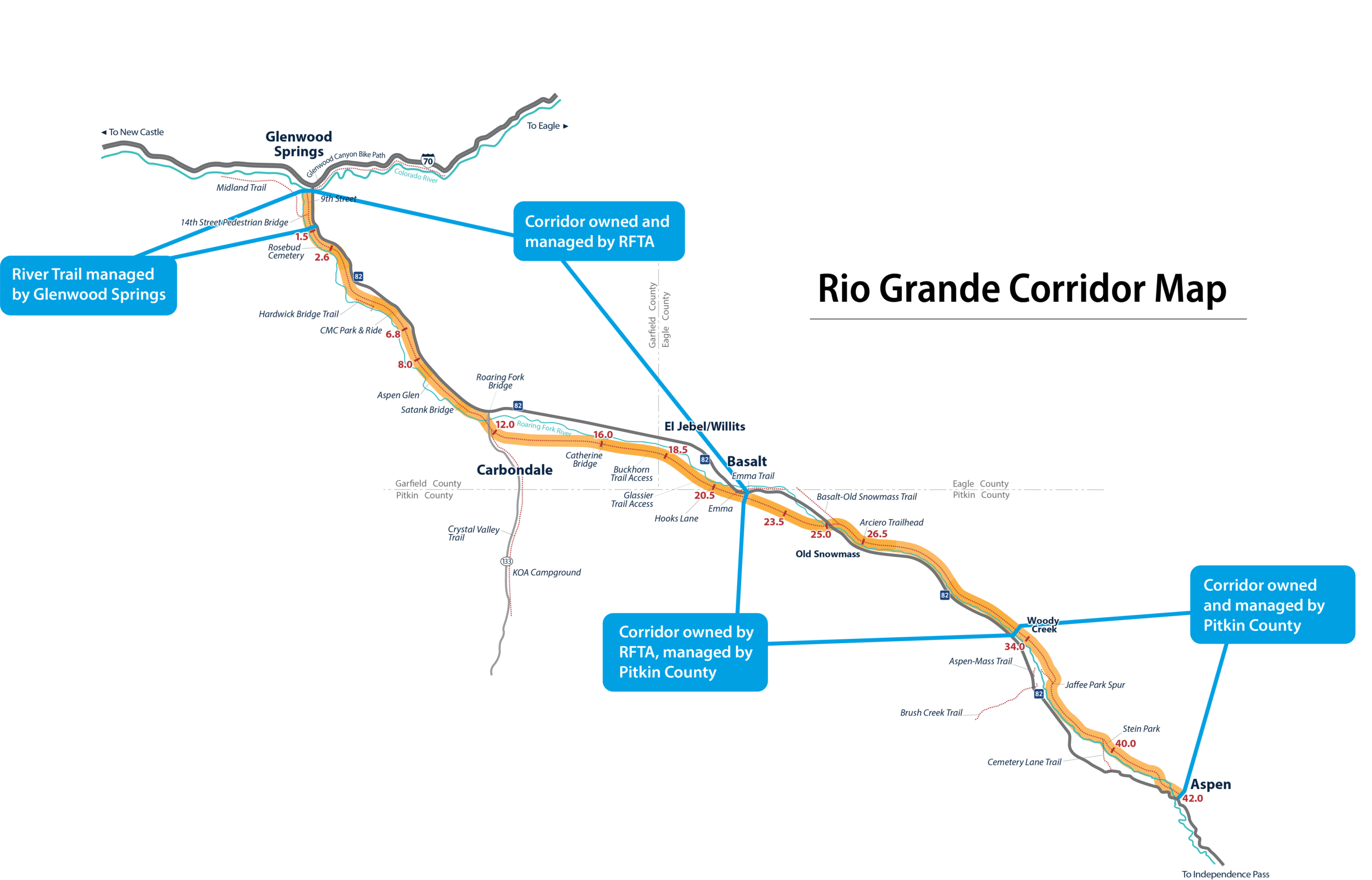
The Rio Grande Corridor spans the length of the Rio Grande Trail from Glenwood Springs to Aspen, Colorado. It offers not only recreational opportunities along the trail and river access, but also serves as an important resource for future transportation in the valley.
RFTA owns and maintains the majority of the Rio Grande Corridor spanning from Glenwood Springs to Woody Creek, Colorado.
Future Plans for the Rio Grande Corridor
While no plans have been created, RFTA is beginning to explore what transportation options could look like utilizing the Rio Grande Corridor. Plans are underway for a RFTA Master Plan to determine which transportation uses would provide the most benefits to community members.
Maintaining the Rio Grande Corridor
To ensure that the Rio Grande Corridor stays in place for recreational purposes and can be used for transportation depending on need in the future, RFTA must maintain the corridor to the standards of a freight corridor. This includes:
- Ensuring grading is ≤2% along the corridor
- Maintaining a width of 100 feet along the corridor
- Monitoring and removing encroachments as needed
Railbanking to Maintain the Corridor
What is railbanking?
Railbanking is a voluntary agreement that preserves unused rail corridors for future transit use by converting them into trails in the interim.
Why is railbanking important?
Without railbanking, portions of the land may revert to many owners, making the corridor fragmented and complex to manage.
What would remove the corridor’s railbanking status?
Railbanking can be lost if:
- The corridor is physically severed from the interstate rail network (e.g. by building or roads).
- Excessive encroachments make freight use unviable.
- The corridor is narrowed or burdened financially beyond practical rail restoration
What is RFTA’s role in maintaining the railbanking status and the Rio Grande Corridor?
RFTA maintains the Rio Grande Corridor by:
- Providing a multimodal corridor that can be used for biking, walking, and could be used for future transit options.
- Protecting and preserving the surrounding land for wildlife.
- Providing access to rivers and open space to the community to provide a higher quality of life.
History of the Corridor
Originally known as the Aspen Branch of the Denver & Rio Grande Western Railroad, rail operations ended between the 1960s and mid-1990s. The corridor was acquired in 1997 by local governments with grant assistance from Great Outdoors Colorado and the Colorado Department of Transportation. The original rail was determined no longer functional and removed for future rail needs. From there, the corridor was preserved through railbanking to protect the corridor and enable trail development.
In 2001, the Roaring Fork Railroad Holding Authority (RFRHA) was merged into RFTA. RFRHA was created in 1993 by the same constituent governments as RFTA, in order to acquire 34 miles of the Rio Grande Railroad corridor in the Roaring Fork Valley, which it purchased in 1997.